Digital Shift Work : The Two Agent Model for Long Horizon, Auditable AI Automation
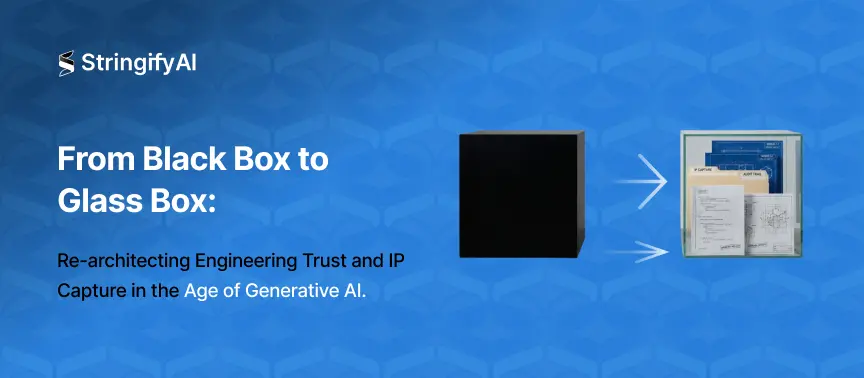
The current discourse surrounding AI is dominated by a relentless fixation on performance benchmarks and model parameters. However, beneath the surface of this computational arms race lies a more consequential transformation. As the enterprise landscape transitions from experimental "chat" interfaces to production-ready Digital Shift Work, the industry is confronting a fundamental architectural reckoning.
The Transparency Imperative: Beyond the "Black Box" Legal Crisis
The opacity inherent in many contemporary AI systems—commonly termed the "black box"—is frequently mischaracterized as a mere technical limitation. In reality, it represents a profound collision with the foundational principles of procedural fairness and administrative accountability.
The "black box" is formally defined as a state of non-disclosure regarding the internal logic that transforms inputs into outputs. The consequences of this opacity are best illustrated by the "Robo-Debt" (Online Compliance Intervention) crisis in Australia. This automated recovery system operated on a concealed, flawed assumption: that annual income could be averaged linearly across a year. Because the system's logic was inscrutable, citizens were deprived of their right to contest decisions, leading to a systemic failure of administrative justice.
To mitigate such liabilities, the field of Explainable Artificial Intelligence (XAI) has emerged as a critical legal-technical requirement. XAI ensures that automated systems provide interpretability, justifiability, and contestability, aligning AI operations with the "duty to give reasons" inherent in modern legal frameworks.
Multi-Agent Specialization: Orchestrating Enterprise Intelligence
The era of the "single-brain" AI is rapidly being superseded by Multi-Agent Architectures. While a monolithic model is sufficient for discrete, narrow tasks, it lacks the resilience and scalability required for long-horizon automation—complex workflows that span multiple domains, such as global supply chain reconciliation or recursive software audits.
This shift signals the move from basic automation to true Agentic AI. Unlike traditional Robotic Process Automation (RPA), which relies on static, fragile rules, multi-agent systems leverage a team of specialized agents—Planners, Researchers, and Reviewers—to reason over ambiguity. By 2026, industry analysts predict that 80% of enterprises will deploy AI agents, moving the competitive landscape from "AI-enabled" to AI-dependent.
The Two-Agent Model: Decoupling Strategy from Execution
A pivotal design pattern in the engineering of reliable AI is the Two-Agent Model. This architecture fundamentally separates the cognitive process of planning from the operational process of execution.
1. The Context Agent (The Strategic Planner) :
The Context Agent serves as the "thinking" brain. It is tuned for depth and high-fidelity reasoning. Its primary function is to ingest vast datasets, identify contingencies, and develop a comprehensive Master Execution Plan. By isolating this phase, we ensure that the system does not act until it has achieved a rigorous understanding of the task's context.
2. The Execution Agent (The Real-Time Actor) :
The Execution Agent is the "doing" brain, optimized for speed and deterministic response. It activates only after a plan is finalized. By decoupling it from the heavy lifting of strategic analysis, the Execution Agent can navigate live interactions and real-time curveballs without the "latency stall" that plagues monolithic models.
This separation is critical for maintaining systemic integrity. It allows for human-in-the-loop (HITL) checkpoints where the Master Plan can be audited before execution, ensuring that the AI’s intent aligns with organizational policy.
The Socio-Technical Audit: Hardening AI for the Real World
A purely technical audit of code is an insufficient safeguard for enterprise AI. To achieve true reliability, organizations must adopt an End-to-End Socio-Technical Algorithmic Audit (E2EST/AA). This methodology, championed by the European Data Protection Board (EDPB), acknowledges that AI systems are "deeply socio-technical" and must be evaluated within their actual implementation context.
An effective socio-technical audit focuses on two critical vectors:
- Pre-processing Integrity:: Investigating the provenance of training data and identifying the flawed human assumptions baked into initial datasets.
- Post-processing Impact:: Monitoring the real-world outcomes of the system's decisions to detect "drift" or unintended societal harms.
Engineering Intelligible Futures
The transition to Digital Shift Work represents the maturation of the AI industry. The legal crises of the "black box" era are directly catalyzing the innovation of the Two-Agent Model. By decoupling thinking from doing and subjecting the entire process to socio-technical scrutiny, we move past the "magic" of AI toward a future of transparent, collaborative, and accountable engineering.
The 2-Agent AI approach represents a fundamental shift toward more intelligent, reliable, and scalable autonomous systems. By decoupling context understanding from execution, organizations can build AI systems that combine strategic thinking with operational excellence.
As agentic AI workflows continue to evolve, the organizations that embrace this architectural paradigm will be best positioned to leverage the full potential of autonomous AI agents. The future belongs to systems that can think deeply and act swiftly – and the 2-Agent model provides the blueprint for achieving this balance.
Ready to transform your AI strategy? The 2-Agent approach offers a proven path toward more effective, auditable, and scalable autonomous systems that can drive real business value in today's competitive landscape.